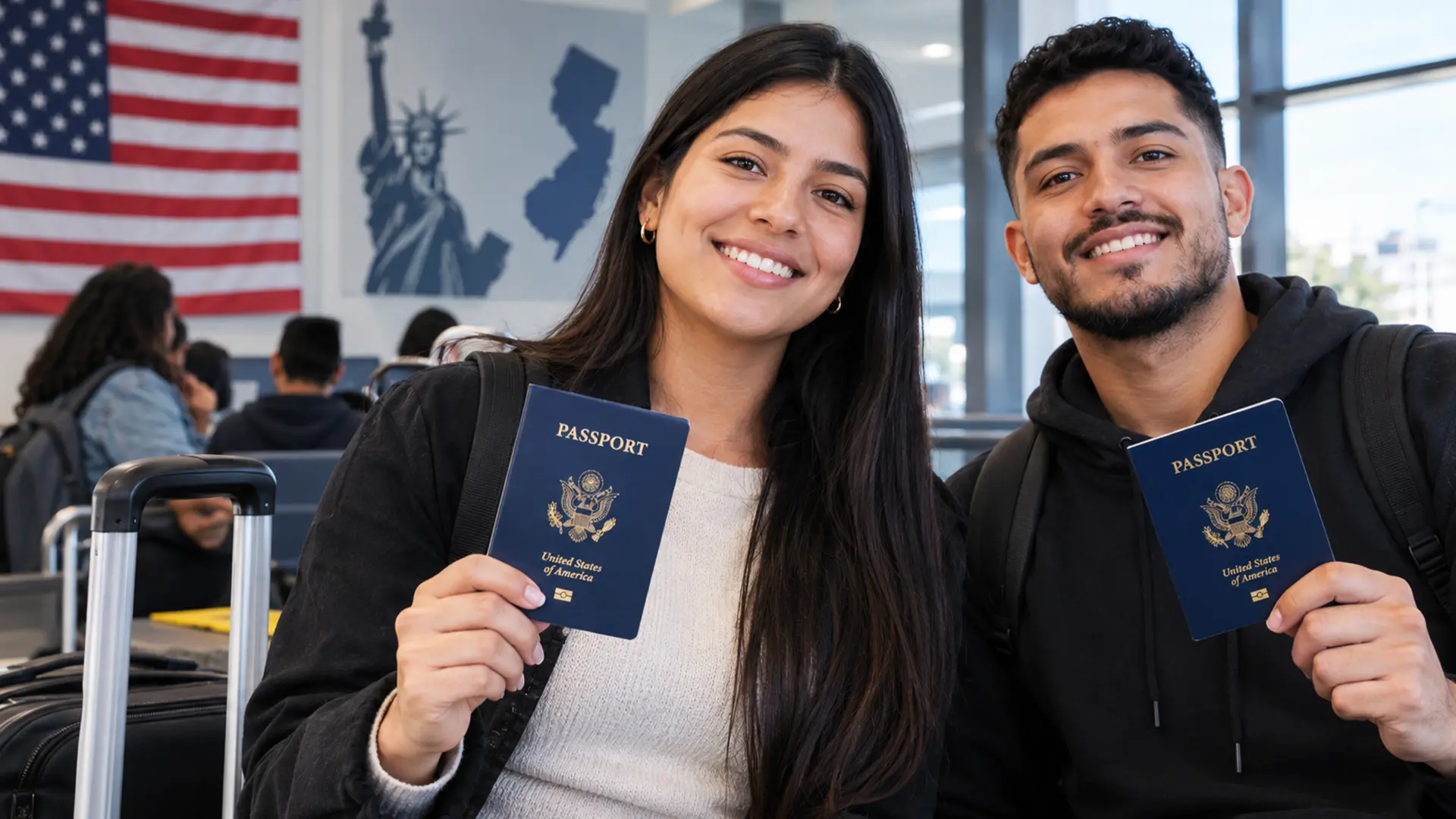

If you live in New Jersey and need to present U.S. documents in another country, you may be asked to obtain an apostille. This certificate allows certain public documents to be officially recognized abroad without going through the traditional consular legalization process.
Although apostilles are commonly required for educational, legal, immigration, and personal matters, many people are unsure when they need one and which documents may require it.
Here is what you need to know about apostilles, what they are used for, and when you may need one.
Aunque es un requisito habitual en trámites educativos, legales, migratorios y personales, muchas personas desconocen cuándo necesitan una apostilla y qué documentos pueden requerirla.
Aquí te explicamos qué significa, para qué sirve y en qué situaciones podrías necesitarla.

What Is an Apostille and What Is It Used For?
An apostille is an official certificate that authenticates the origin of a public document. Its purpose is to verify the authenticity of the signature, the official capacity of the person who signed it, and, when applicable, the seal appearing on the document.
This procedure is regulated by the 1961 Hague Apostille Convention, an international agreement that simplifies the recognition of public documents between participating countries.
For example, if you earned a degree in the United States and need to submit it to a university in another country, you may be asked to provide an apostille to verify its authenticity.
An apostille does not certify that the information contained in a document is true, nor does it guarantee acceptance for every type of procedure. Its purpose is to authenticate the document’s origin.
When Do You Need to Apostille a Document in New Jersey?
In general, you need an apostille when you must use a document issued in the United States before an authority or institution in another country that is a member of the Hague Apostille Convention.
Here are some common situations:
Marriage Procedures in Another Country
If you plan to get married abroad, local authorities may request apostilled U.S. documents, such as birth certificates, affidavits, or documents proving your marital status.
Requirements vary depending on the country and the institution handling your marriage.
Educational Documents and Academic Degrees
If you want to continue your education in another country, a university may require apostilled diplomas, graduation certificates, or other academic documents.
This helps authenticate the signature of the educational authority or official who certifies the document.
Immigration and Residency Applications
Some immigration procedures require documents issued in the United States to verify personal, family, or legal information.
Depending on the application and destination country, you may need apostilled birth certificates, marriage certificates, background checks, or other supporting documents.
Notarized Powers of Attorney and Legal Documents
If you need to authorize a family member or representative to handle legal matters in your home country, you may need to submit a document signed before a notary public in New Jersey and subsequently apostilled.
An apostille may also be required for affidavits and other notarized documents intended for use abroad.
Inheritance and Family Matters
Procedures involving inheritance, estate settlements, child custody, or family authorizations may require apostilled U.S. documents so they can be recognized by authorities in another country.
Which Documents May Need an Apostille?
The type of document depends on the procedure you are completing and the country where you intend to use it.
Some common examples include:
- Birth, marriage, and death certificates: Used for family matters, marriage procedures, or citizenship applications.
- Diplomas and academic certificates: Required for educational purposes or academic credential evaluations.
- Powers of attorney: Used to authorize another person to handle legal matters on your behalf.
- Affidavits: Required for certain personal or legal procedures.
- Court documents: Used in international legal proceedings.
- Background checks: Required when a foreign authority asks for personal background information.
Not all documents follow the same procedure. Some must be original documents or certified copies, while others require prior notarization or additional certification.
Do All Countries Accept Apostilled Documents?
No. Apostilles are used between countries that are members of the 1961 Hague Apostille Convention.
If you need to present a U.S. document in a country that is not part of this agreement, you may need to complete a different authentication and consular legalization process instead of obtaining an apostille.
Before starting any procedure, confirm the requirements with the institution that will receive your document.
You should also check whether an official translation is required. Remember that an apostille and a certified translation are two different procedures: the apostille authenticates the origin of the document, while the translation makes its contents understandable in another language.
What Is the Difference Between Apostilling and Notarizing a Document?
Although these procedures are often confused, they serve different purposes:
- Notarization: A notary public verifies certain acts, signatures, or statements, depending on their legal authority.
- Apostille: A competent authority authenticates the signature, official capacity, and seal of a public official or notary to facilitate the document’s recognition in another country.
In some cases, a document must be notarized before it can receive an apostille. However, not every document requires this additional step.
You should also remember that having a notarized document does not automatically mean it is ready for international use.

What Should You Check Before Using a Document Abroad?
Before submitting a U.S. document in another country, review the following:
- Destination country: Confirm whether it is a member of the Hague Apostille Convention.
- Type of document: Check whether you need the original, a certified copy, or a notarized document.
- Receiving institution: Review the requirements of the university, consulate, civil registry, or institution that will receive the document.
- Translation: Ask whether an official translation into the destination country’s language is required.
- Validity period: Some documents, particularly certificates and background checks, may have age limits established by the receiving institution.
You should also keep in mind that U.S. federal documents, such as certain FBI background checks, follow a different procedure from documents issued by the State of New Jersey. The appropriate authority depends on where the document originated.
Do You Need Help With Documents for Use in Another Country?
If you live in New Jersey and need to present U.S. documents abroad, getting guidance in Spanish can help you understand the requirements and avoid mistakes during the process.
At Konecta, we provide assistance with document review and apostille processing, along with guidance on certified translations when required by the destination country.
Learn more about our apostille services in New Jersey and get assistance with preparing your documents according to the requirements of the country where you need to use them.
Visit us at our locations in Hightstown and East Windsor, New Jersey.