
Certified translations are translations of official documents that include a signed statement from the translator or translation agency certifying that the translation is complete and accurate to the original document.
This type of translation is commonly required for immigration, educational, legal, employment, and government-related processes in the United States and other countries. Unlike a standard translation, certified translations meet specific requirements that allow institutions to accept the document as valid for official purposes.
If you need to submit documents in a language other than the original to a government agency, educational institution, or other official entity, there is a good chance that you will need a certified translation.
What Does It Mean for a Translation to Be Certified?
A certified translation includes a certification statement issued by the translator or translation company responsible for the translation. This certification confirms that:
- The translation is accurate and complete.
- The translator is qualified to perform the translation.
- The translated content faithfully reflects the original document.
The certification typically includes the translator’s signature, the date of issuance, and the contact information of the translator or agency responsible for the work.
What Are Certified Translations Used For?
Certified translations allow documents issued in one language to be officially accepted by institutions operating in another language.
They are frequently required for:
- Immigration applications.
- Permanent residency or citizenship applications.
- USCIS filings.
- College and university admissions.
- Foreign credential evaluations.
- Employment applications.
- Court proceedings.
- Notarial processes.
- Visa applications.
- Civil registry procedures.
Many institutions reject documents that have been translated informally or by individuals who cannot certify their accuracy. For this reason, it is important to verify the requirements before submitting your documents.
What Documents Commonly Require Certified Translations?
Many different types of documents may require certified translation services.
Some of the most common include:

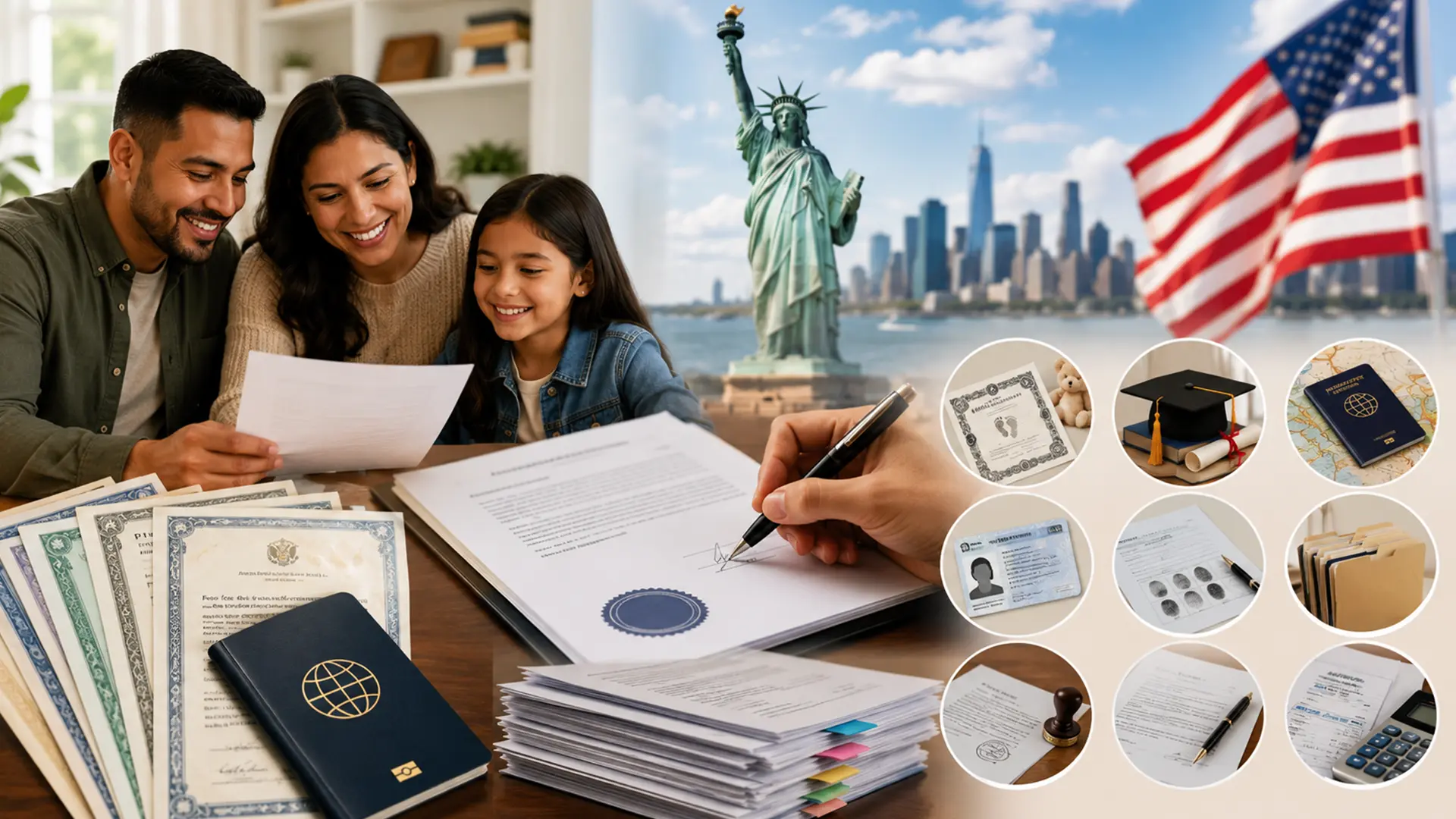
Civil Records and Vital Documents
- Birth certificates.
- Marriage certificates.
- Divorce decrees.
- Death certificates.
Academic Documents
- Diplomas.
- University degrees.
- Academic certificates.
- Academic transcripts.
- Grade reports.
Immigration Documents
- Passports.
- National identification documents.
- Police clearance certificates.
- Immigration records.
- Sponsorship documents.
Legal and Financial Documents
- Powers of attorney.
- Contracts.
- Bank statements.
- Affidavits.
- Court documents.
Are Certified Translations Required by USCIS?
Yes. The U.S. Citizenship and Immigration Services (USCIS) requires that any document submitted in a language other than English be accompanied by a complete English translation and a certification of accuracy.
For example, if an applicant submits a birth certificate issued in Spanish as part of an immigration case, they must also provide a certified English translation so USCIS can properly review the document.
Failure to comply with this requirement may result in processing delays, requests for additional evidence, or even the rejection of the application.
Difference Between a Standard Translation and a Certified Translation
Many people assume that any translation is sufficient for an official process, but there are important differences.
Standard Translation | Certified Translation |
Translates the content only. | Includes a formal certification statement. |
Intended for personal or informational use. | Intended for legal, immigration, and official use. |
May not be accepted by institutions. | Commonly required for official procedures. |
Does not include a statement of accuracy. | Includes a certification of accuracy. |
For this reason, when a document will be submitted to a government agency, educational institution, court, or immigration authority, it is generally recommended to obtain a certified translation.

Who Can Provide Certified Translations?
The requirements may vary depending on the institution and the country involved.
In the United States, a certified translation can generally be completed by a qualified translator who certifies the accuracy of the translation. However, many organizations prefer working with professional translation agencies that have experience handling official documents and understand the specific requirements of different applications.
Working with experienced professionals helps prevent formatting errors, omissions, and inconsistencies that could delay your process.
How Long Does a Certified Translation Take?
Turnaround time depends on several factors, including:
- The number of documents.
- The number of pages.
- The complexity of the content.
- The languages involved.
- Specific filing or agency requirements.
Short documents such as birth certificates or marriage certificates can often be completed quickly, while academic records or lengthy legal documents may require additional processing time.
Tips Before Requesting a Certified Translation
Before starting the process, it is recommended that you:
- Confirm the requirements of the receiving institution.
- Verify the required language.
- Ensure the original document is clear and legible.
- Ask about turnaround times.
- Confirm that a certification statement will be included with the translation.
Taking these precautions can help avoid delays and additional costs.
Konecta Helps You with Your Certified Translations
If you need certified translations for immigration, educational, legal, or personal purposes, Konecta offers professional official document translation services.
Our team works with documents commonly used in USCIS applications, educational institutions, government agencies, and other organizations that require accurate and certified translations.
Documents we can help translate include:
- Birth certificates.
- Marriage certificates.
- Diplomas and degrees.
- Immigration documents.
- Legal records.
- Personal and business documentation.
With Konecta, you can obtain reliable, accurate, and professionally prepared translations designed to meet the requirements of your application or process.
Preguntas frecuentes
What are certified translations?
Certified translations are translations of official documents accompanied by a certification statement confirming that the translation is complete and accurate to the original document.
Does USCIS accept certified translations?
Yes. USCIS requires certified translations for any supporting document that is not written in English.
How much does a certified translation cost?
The cost depends on the type of document, the number of pages, and the complexity of the content.
Can I translate my own documents?
For many official applications, this is not recommended. Institutions often require a certification from a qualified translator or professional translation agency.
What documents require certified translations?
Birth certificates, marriage certificates, diplomas, academic transcripts, immigration documents, contracts, and legal documents are among the most common examples.
Do certified translations expire?
In most cases, certified translations do not expire. However, some institutions may require recently issued documents depending on the specific application.
Where can I get certified translations?
You can obtain certified translations through professional agencies such as Konecta, which provides official document translation services for a wide range of personal, legal, educational, and immigration needs.